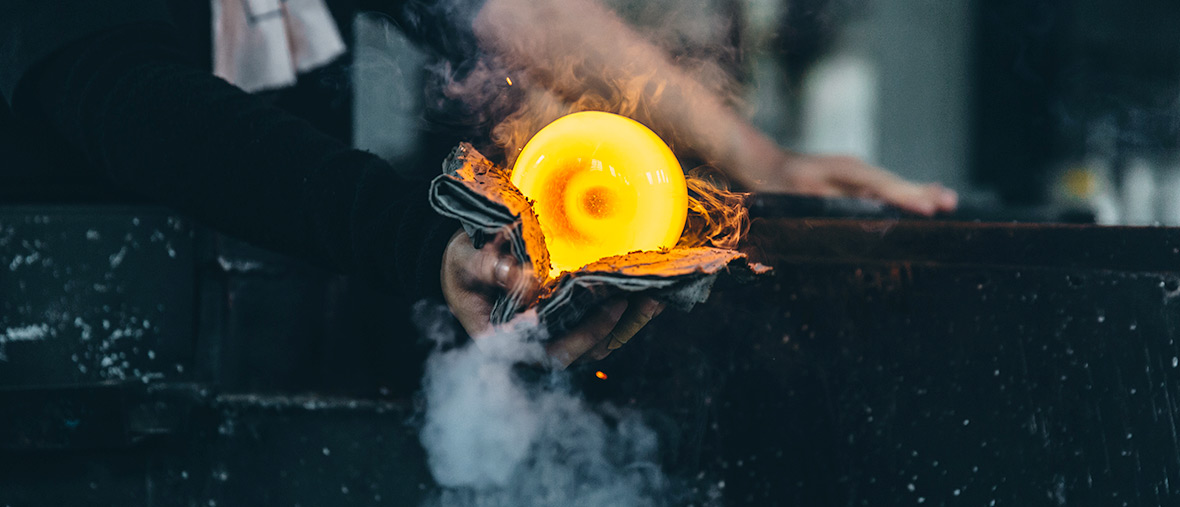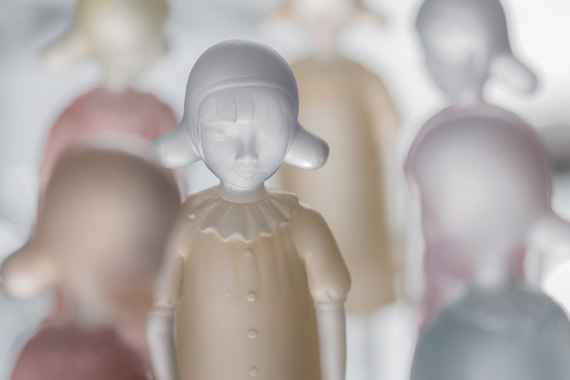
Jingdezhen has long been known as the capital of ceramics in China and many of the works produced in ancient times have become priceless pieces exhibited in museums around the world. We traveled to Jingdezhen a few years ago, but it was only when we saw the work of Baotatang, a young ceramic maker, that we realized how creative, warm and fashionable ceramics could be. Small animals, busts of friends, illustrations on ceramics – these were all possible using a traditional artform typically dismissed as antiquated and boring by young people in China. Now we see that it has become a new discipline for young creatives in China to explore.
We recently caught up with Baotatang to discuss ceramics, her inspiration and thoughts on creative culture in China.
For more from Baotatang on NeochaEDGE, link here. /// cy
![]()
“Baotatang, Baotatang a young ceramics girl” is how our friend Yan Cong described you. What’s the origin of the name?
Baotatang is a brand of Chinese candy medicine that was used in the 50s and 70s to get rid of roundworm. While the candy doesn’t exist anymore, I always liked its triangular, pyramid shape. I later used this name as an online ID to research childhood toys and items from this time period.
![]()

![]()
When you’re working with ceramics, what special tools do you need? What is the creation process?
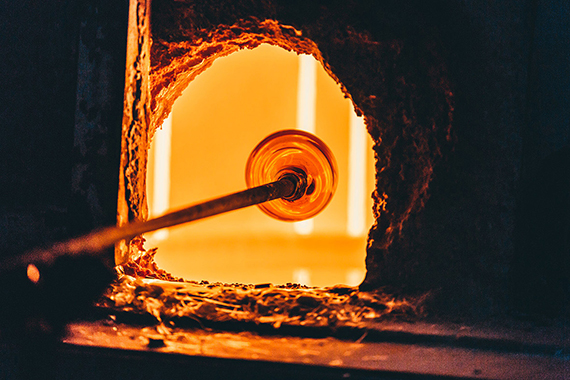
The main thing is to think of something fun to create, just like when we were all young and played with clay. Working with ceramics is a bit like making food. Let’s take a simple cat cup as an example. I first knead the clay evenly, press it into a mold and then pull out the shaped cup. I then add on the image of the cat, drawing in the ears, eyes, nose and other details before adding a thin transparent glaze to give the cup some shine. The last step is to put it into the kiln to be baked at the proper temperature for the right amount of time.
![]()

![]()
What products are you working on?
Right now, I’m mostly working on hand-made pendants and various types of cups.
I also started planning a series of hand-made ceramic currency that can be exchanged for different services between families or friends. For example, there will be a “dish-washing coin” that you can use when you don’t want to wash dishes, a “sweet-words coin” that can be exchanged for complements, a “hell coin” which forces the recipient to do something very scary and a “king coin” which can be redeemed for any service.
I also want to make a small flowerpot in the shape of rubber rainboots that we used to wear when we were young.
![]()
“…my only real plan is to keep designing products I like…”
![]()
Most people think of ceramic artists as being older. As a young person, how did you come to fall in love with ceramics?
When I was young, my mom once gave me a shoebox for the my birthday. Inside, the box was filled ceramic pieces- bridges, castles, pagodas and pieces of all different sizes. She bought them at the flower and bird market and I absolutely loved them ! I remember there was one little piece which was exactly like a Buddhist temple. Maybe it was from that experience that I started to like ceramics.
Now, as a ceramic artist, I love how ceramics makes me feel cool and refreshed in the summer and how warm I feel next to the kiln in the winter. On top of that, I have some internal organ problems and in Chinese medicine, working with earthen materials is good to combat this.
![]()

![]()
Are the illustrations on the cups all your own? Did you study fine arts? How did you start working on ceramics?
In the past, I just liked to draw and paint and later learned ceramics. All the drawings on the cups are images or people from my life that I like- it’s kind of like a sketch book. I’ve thought about drawing other people’s portraits for money, but every time I’ve tried, it doesn’t come out well. In the future, I’m determined to keep on drawing.
Below is the portrait of a girl I met on Douban. She is a ballerina and loves to wear 1980s retro clothing. The first time I saw her, I immediately wanted to draw her portrait and since then, I’ve drawn it many times.
![]()

![]()
The below series is a story I wrote while I was studying Japanese. However, my Japanese language was very bad and I had to ask some Japanese friends to edit it. They ended up really liking it and we edited it so it sounds very fluent, thanks to them!
![]()

![]()
This is my cat. I took her up into the trees to play and took some photos, but I don’t think she likes trees very much. In any case, as you can see, all the drawings have something to do with my life.
![]()

![]()
“…as a ceramic artist, I love how ceramics makes me feel
cool and refreshed in the summer and how warm
I feel next to the kiln in the winter...”
![]()
What are some of the biggest influences on your work?
When I’m working, I want to make things which I really love. There are also some things that I want to make that do not exist in my life.
My emotions are the biggest influence on my work! Like when I’m in love, I really want to make something for the one I’m thinking of.
![]()

![]()
How do you distribute your products? Do you have any plan for this?
I’ve also sold some hand make spoons and cups- I’m always thinking whether I can make new pieces.
My only real plan is to keep designing products I like.
I also have an idea to have ceramics become a vehicle for telling stories. For example, since I’m interested in exploring childhood memories, I’d like to put some related images on ceramics like comics, stories, illustrations, poems and other scenes from childhood.
![]()

![]()
What is your favorite activity to do with friends?
I usually prefer to be by myself indoors, but if I go to my best friends’ house, we just do whatever, eat cookies and hang out.
![]()

![]()
What is the most frequent phrase that you say?
Anything that carries the meaning of friendship.
![]()

![]()
What’s the most inspiring creative work that you’ve seen recently.
I’ve recently really enjoyed watching a Japanese show called “Completely Redesign Your Home.” Each episode introduces a house or apartment with a particular problem (for example, a house cluttered with books, a house with no room to place a grand piano or a house that needs to accomodate little kids and old grandparents…) With the help of a designer, the houses are all able to undergo a transformation into a beautiful, practical home!
The architect and interior designers are amazing and have a great eye for changing the structure of the home as well as tons of little insights from their experience. My favorite part of the show is the ending when you can see the astonished reaction from the families who live there. They are always so appreciative that a designer could really help them make such a big change that affects their entire life.
![]()
“…my emotions are the biggest influence on my work!
Like when I’m in love, I really want to make
something for the one I’m thinking of...”
![]()
How would you describe China’s creative culture to a foreigner?
I will recommend my favorite artists and writers. For example, the comic book artist Qi Shui and the writer Zhu Yue, who have both created some unimaginable things. I really like their kind of “slow and secret creativity.”
![]()

![]()
Some people say that Chinese creativity is still in its formative stages and there are many examples of copying. What do you think about this? What do you think is the most valuable characteristic of Chinese creatives?
Every country is filled with many creative people – some of them are just grassroots amateurs while others may be mature and successful. But the amateurs don’t just copy and copying is not necessarily a bad thing. Once you’re fed up with copying, you’ll start creating yourself.
What I find I have in common with the creatives who produce work I like is that we all have similar values: be good to other people, make other people think and at the same time have a feeling of being “closed off”. What I mean by “closed off” is that all creativity comes from a mysterious and private place in each of us that is hard to describe. It’s like if you continually pull out the seeds from a potted plant to look at them, the seeds will never have a chance to grow. While you can’t watch how the seeds grow, we all know that they grow all by themselves.
![]()
[Editor's note: If there is anyone interested in purchasing some of Baotatang's pieces, please send us an email at: EDGE@Neocha.com]


我有一些设计,能帮我生产吗???
宝塔糖的陶瓷前世今生之孽缘再起!!!